
Residential Epoxy Flooring
Floors That Handle Real Workshop Use
Residential Epoxy Flooring in Wendell for garages, basements, and utility spaces exposed to chemicals and moisture
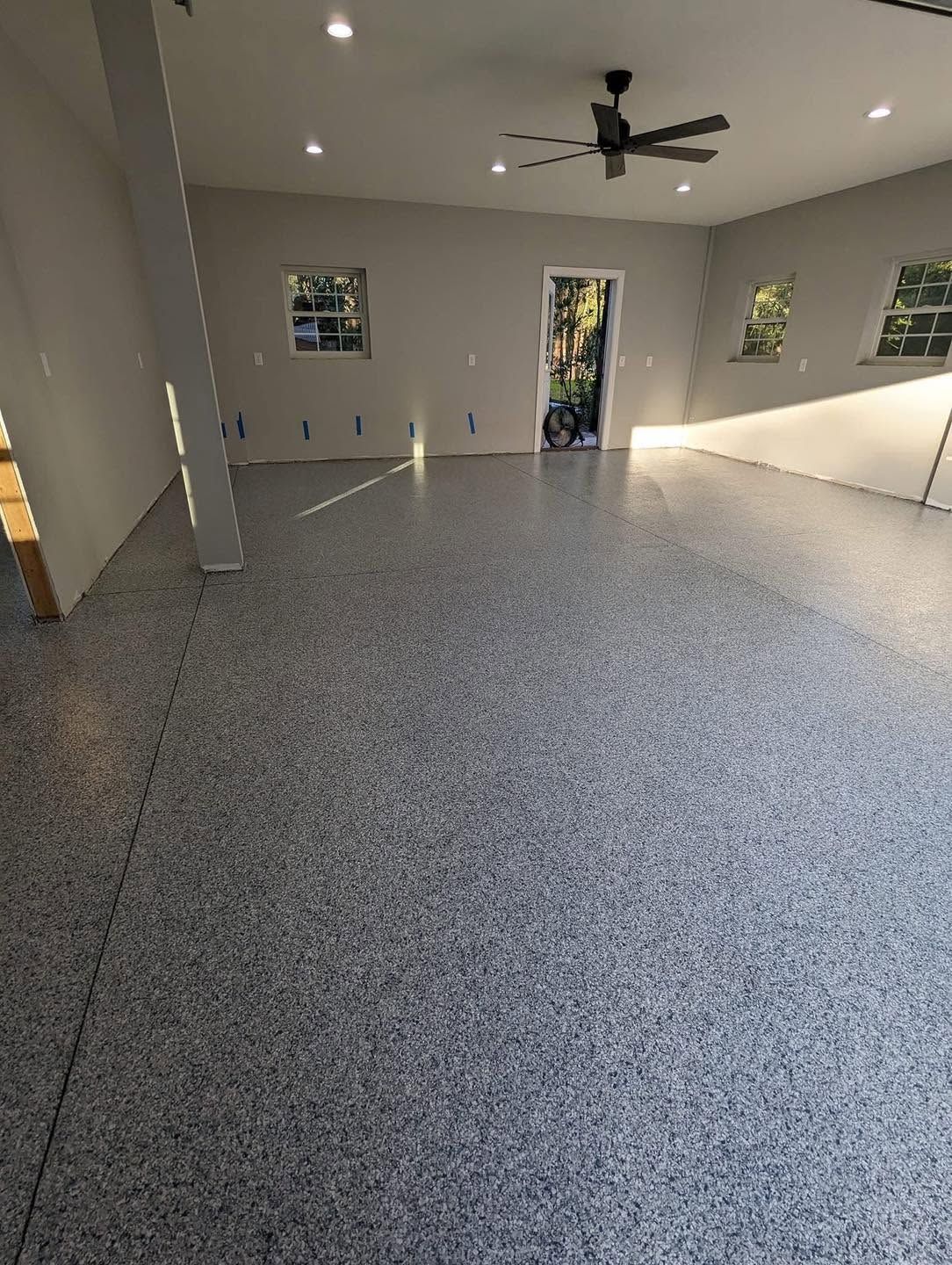
NC Floor Wizards applies residential epoxy flooring systems designed to withstand the conditions garages and basements actually face: oil drips, antifreeze spills, moisture migration, and the weight of vehicles or heavy equipment. The work involves complete surface preparation that addresses concrete porosity and existing contamination, followed by resin application that bonds mechanically to the substrate. Homeowners throughout Wendell use these installations in workshops where chemical resistance and stain rejection matter more than decorative tile or painted concrete can provide.
Epoxy systems resist penetration from automotive fluids, household chemicals, and standing water because the cured resin creates a nonporous barrier across the concrete surface. Surface preparation removes laitance, oils, and weak concrete layers so the epoxy bonds to sound material rather than sitting on top of contaminants that eventually delaminate. The result is a floor that sheds stains instead of absorbing them and tolerates moisture without the efflorescence or spalling uncoated concrete develops.
Schedule a property evaluation to review substrate condition and discuss finish options that match how the space is used.
What Proper Surface Preparation Requires
The installation begins with mechanical preparation that opens the concrete pores through diamond grinding or shot blasting, removing surface contaminants and creating the texture profile epoxy needs for adhesion. Cracks and joints receive flexible filler to prevent telegraph cracking, and the surface is vacuumed to remove all dust before resin contacts the slab. Without this level of preparation, epoxy sits on a weak layer and peels under traffic or temperature changes.
After the epoxy cures, you'll notice liquids bead on the surface instead of soaking in, and tire marks wipe away with a damp cloth rather than staining permanently into the concrete. The finish you choose—metallic epoxy, broadcast flake, solid colors, or quartz epoxy—determines slip resistance and visual appearance, but all options share the same chemical resistance and impermeability. Metallic systems create depth and movement in the coating, flake systems add texture and hide minor surface imperfections, solid colors provide uniform industrial appearance, and quartz epoxy delivers the highest abrasion resistance for spaces with rolling toolboxes or metal-legged workbenches.
The coating reaches full cure within several days depending on temperature and humidity, but the floor supports foot traffic within 24 hours and vehicle traffic once the manufacturer's specified cure time passes. Cold temperatures slow the curing reaction, so winter installations in unheated garages may require extended cure times or supplemental heating to ensure proper cross-linking of the resin.
What Homeowners Usually Ask
Questions about residential epoxy flooring often focus on preparation requirements, finish durability, and how the coating performs under specific conditions common in Wendell homes.
What preparation does the concrete need before epoxy application?
The surface must be mechanically abraded to remove the top layer of cement paste and contaminants, then profiled to create the anchor pattern epoxy requires for bond strength, which typically involves diamond grinding equipment rather than acid etching alone.
How do metallic epoxy and flake systems differ in performance?
Metallic epoxy creates a smooth, reflective finish with color depth but shows dust and requires more frequent cleaning, while flake systems add texture that hides dirt and provides better slip resistance in areas exposed to water or oil.
When should epoxy be applied in spaces without climate control?
Installation works best when ambient and substrate temperatures remain between 50 and 90 degrees for at least 24 hours after application, which means spring and fall typically offer the most stable conditions in Wendell garages without heating or cooling.
What causes epoxy to peel or delaminate after installation?
Peeling occurs when the coating bonds to surface contaminants, laitance, or curing compounds rather than sound concrete, or when moisture vapor pressure exceeds the bond strength because no vapor barrier exists under the slab.
How does quartz epoxy handle impacts compared to standard broadcast systems?
Quartz epoxy incorporates fine silica aggregate throughout the coating thickness rather than just on the surface, which distributes impact energy and resists chipping from dropped tools or metal objects better than decorative flake systems.
NC Floor Wizards provides detailed estimates that account for surface condition, finish selection, and project timing to ensure the installation meets the functional demands of your specific space. Request a free residential flooring estimate to review finish options and receive a timeline based on current substrate conditions.