Commercial Epoxy Flooring
Surfaces Designed for Daily Equipment Traffic
Commercial Epoxy Flooring in Raleigh for warehouses, retail spaces, and facilities with heavy foot traffic and rolling loads
Forklifts, pallet jacks, and constant foot traffic break down concrete surfaces through abrasion and impact, leaving pitted floors that collect dirt and require frequent patching. NC Floor Wizards installs commercial epoxy systems that distribute those loads across a bonded resin layer instead of relying on the concrete's exposed surface to resist wear. Facilities in Wendell and Raleigh handling inventory movement, customer traffic, or laboratory work use these floors because the coating resists both mechanical damage and chemical exposure while maintaining a cleanable surface that doesn't require waxing or sealing.
Commercial installations differ from residential applications in resin thickness, aggregate content, and cure requirements because the floor must handle continuous loading rather than intermittent use. The coating builds up in multiple layers, often incorporating quartz or other hard aggregates that increase compressive strength and abrasion resistance beyond what decorative systems provide.
Arrange an on-site consultation to evaluate traffic patterns and discuss finish systems that match your operational requirements.
How Commercial Systems Address Facility Demands
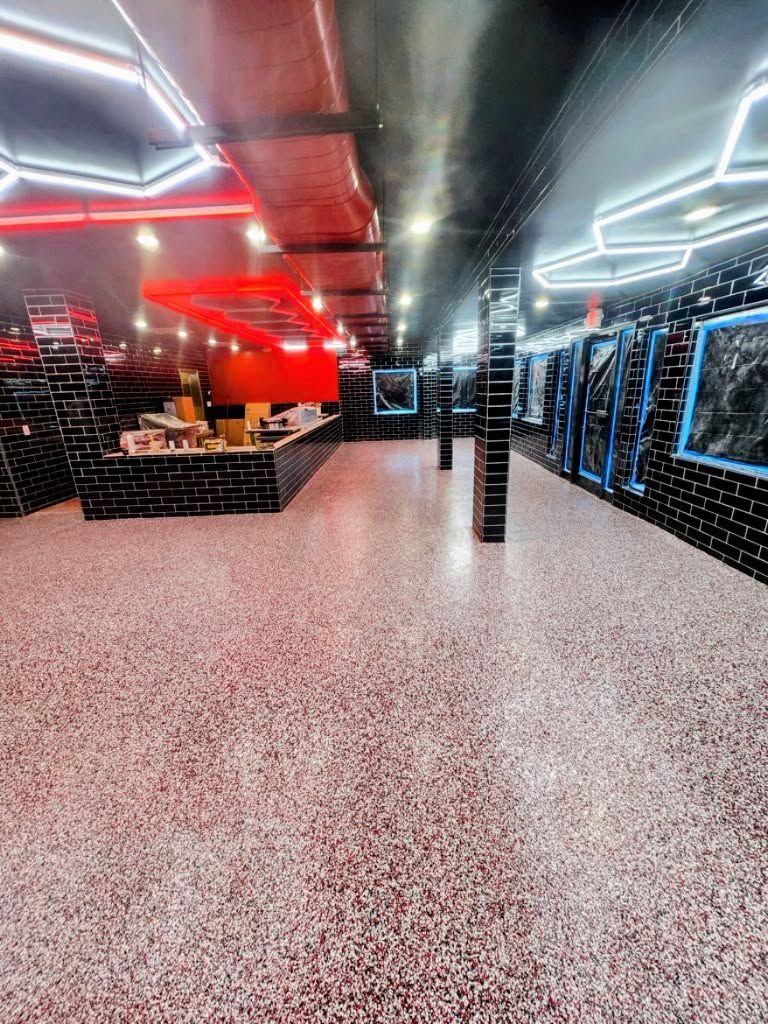
Installation timing coordinates with facility operations to minimize downtime, often occurring during off-shifts or planned closures so the space returns to service as quickly as curing schedules allow. Surface preparation involves the same mechanical profiling required for residential work but extends across larger areas and must address existing coatings, control joints, and drainage slopes that affect how the epoxy flows and cures. The finish you select—metallic epoxy for showrooms, broadcast flake for retail floors, solid colors for warehouses, or quartz epoxy for labs and restaurants—determines maintenance frequency and slip resistance under your specific conditions.
Once cured, the floor supports wheeled carts and equipment without rutting or surface damage, and spills wipe clean without staining into the substrate or leaving residue that attracts dirt. Restaurant floors resist grease and acidic liquids, garage floors shed automotive fluids, lab floors tolerate chemical spills, and retail floors maintain appearance despite shopping cart traffic and seasonal weather tracked in from outside. The seamless surface eliminates the grout lines and seams that trap debris in tile installations, reducing the labor required to maintain sanitary conditions in food service or medical environments.
The coating's durability depends on proper substrate preparation and resin thickness, so areas with point loading from equipment legs or shelving may require additional aggregate or thicker build-up to prevent indentation. Control joints in the concrete remain visible through the epoxy and may eventually telegraph hairline cracks as the building settles, which is a normal characteristic rather than an installation defect.
Answers to Frequent Service Questions
Business owners evaluating commercial epoxy flooring typically ask about installation logistics, maintenance requirements, and how the coating performs under specific operational conditions.
What installation timeline should we expect for a commercial space?
Most projects require one to three days depending on square footage and coating system, with surface preparation and primer application on day one, base coat and aggregate broadcast on day two, and topcoat application on day three if a multi-layer system is specified.
How do we maintain epoxy floors in high-traffic retail environments?
Regular dust mopping removes abrasive grit that wears the surface, and damp mopping with pH-neutral cleaner removes tracked-in dirt without degrading the resin, which eliminates the stripping and waxing required for polished concrete or VCT tile.
When does quartz epoxy make sense compared to standard flake systems?
Quartz systems cost more but last longer in environments with heavy rolling traffic, chemical exposure, or thermal cycling because the silica aggregate reinforces the entire coating thickness rather than just adding texture to the surface.
What causes commercial epoxy to yellow or discolor over time?
UV exposure from windows or overhead doors breaks down aliphatic resin bonds in standard epoxy, which is why exterior applications or spaces with significant natural light require aliphatic or urethane topcoats that resist photo-degradation.
How does humidity in Wendell affect commercial installation schedules?
Relative humidity above 85 percent can cause amine blush on the epoxy surface during cure, creating a waxy film that interferes with topcoat adhesion, so installation may require dehumidification equipment or timing adjustments during summer months when outdoor humidity peaks.
NC Floor Wizards coordinates installation around your facility schedule and provides maintenance guidance specific to your floor's finish and traffic conditions. Request a commercial consultation to review system options and receive a project timeline that minimizes disruption to your operations.